Shells Set Vector Line Art Collection
A Nautical Whisper—Not a Shout
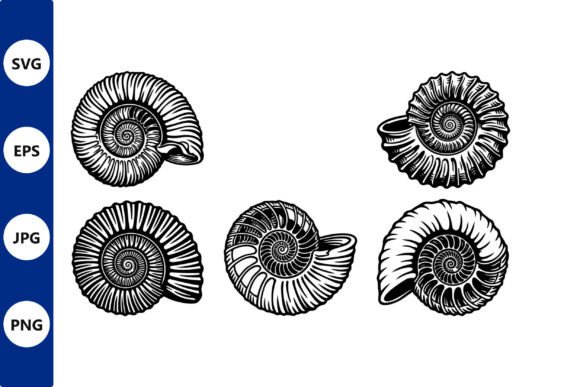
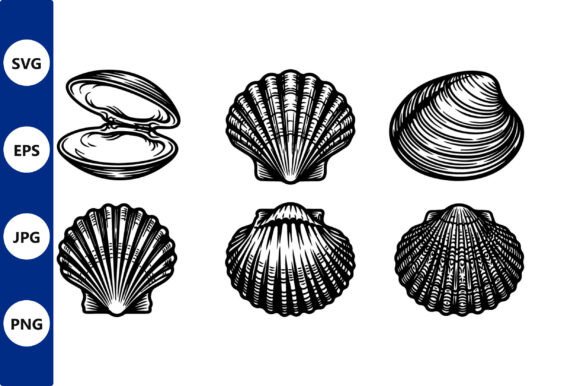
First impression? Quiet confidence. The Shells Set Vector Line Art Collection doesn’t scream “beach vacation”—it breathes coastal calm. Clean, unbroken black lines trace open clam shells, scallops, and conch variants in a balanced grid layout. There’s no shading, no gradients, no ornate filigree—just intentional negative space and rhythmic curves. As an embroidery designer who’s stitched everything from monogrammed baby onesies to boutique aprons, I immediately saw its strength: it’s not *decorative* in the busy sense—it’s *architectural*. That makes it unusually versatile for real-world stitching.
Where It Lives Best—And Why
I recently prepped a batch of linen tea towels for a local kitchenware shop—and this set was my top pick for the corner monogram. Why? Because minimal line art translates cleanly into running stitch or fine satin stitch at 2.5–3.5" wide. On tightly woven fabric like linen or medium-weight cotton duck, the shell outlines held crisp definition without fill stitch bulk. Customers responded well—not just to the nautical theme, but to how *light* and intentional it felt. No visual clutter. Just one clear gesture per shell.
It also worked beautifully on a custom embroidered tote bag for a seaside bookstore. We used a single scallop shape (pulled from the set) as a subtle side accent—stitched in ecru thread on natural canvas. Because the line work is consistent in weight (no tapering or variable stroke), it digitized smoothly into clean stitch paths. No jagged starts, no awkward jump stitches between segments. That matters when you’re batching 40+ units for a small shop product or Etsy listing.
Real Embroidery Realities—What Holds Up, What Needs Care
- Small hoop sizes (under 4"): Works well—but avoid using the full grid. Pick 1–2 shells max. Too many tiny shapes in tight proximity risk thread tension issues or lost detail on dense fabrics.
- Textured or stretchy fabric: Proceed with stabilizer strategy in mind. A lightweight cutaway under knit sweatshirts kept the conch outline legible; a tear-away worked fine on smooth cotton poplin. Skip it on slubbed linen unless you test first—the texture can visually interrupt the line continuity.
- Dark fabric: High-contrast thread (white, cream, or pale seafoam) reads clearly. Avoid light gray or beige on navy—they disappear mid-stitch.
- Curved surfaces (caps, curved pillow covers): The open clam shape adapts better than the tighter conch spiral. Its broader arc conforms more naturally to gentle curves without distorting stitch alignment.
- Frequent washing: Running stitch outlines hold up better than dense fill areas over time. This set leans into that strength—no heavy satin fills to pucker or fray.
What It Adds—Beyond the Stitch
For craft businesses and Etsy sellers, the Shells Set Vector Line Art Collection quietly elevates perceived value. A personalized baby onesie with a single delicate scallop feels considered—not generic. A holiday gift tag embroidered with a tiny conch shape reads handmade, not mass-produced. That distinction builds customer trust. It also supports brand consistency: if your shop leans into minimalist coastal aesthetics, this set delivers cohesive design assets without forcing a theme.
And because it’s built for logos, badges, and decorative prints, it scales elegantly—from a 1" embroidered patch on a denim jacket lapel to a 5" repeat pattern on a nursery pillow cover. No redrawn elements needed. Just smart vector scaling and thoughtful placement.
Practical Notes Every Embroiderer Should Check
- Test on scrap fabric *first*—especially if using textured or dark material. See how thread color interacts with grain and weave.
- Review stitch density in your digitizing software. Line art like this should run at 10–14 spm (stitches per mm) for clarity—too dense and it loses its airy feel; too sparse and edges look broken.
- Confirm hoop size compatibility. The full grid may exceed standard 4x4 hoops—plan for re-hooping or use individual shells.
- Inspect corners and curve endpoints. Clean vector lines don’t always translate to perfect stitch termination—some manual cleanup in your embroidery file may be needed for sharp conch tips.
- Try black-and-white mockups. Since it’s line art, grayscale previews reveal contrast issues faster than color renders.
- Check licensing before selling finished products or digital embroidery files. As an Illustrations asset, usage rights matter—especially for commercial embroidery or resale as a Graphics bundle.
Final Thought: Less Is Anchored Here
This isn’t a flashy, trend-chasing design. It’s a quiet, confident tool—one that works hardest when you let it breathe. I’ve used the Shells Set Vector Line Art Collection for baby embroidery, sweatshirt embroidery, holiday embroidery, and custom apparel—and each time, it landed with the same effect: recognition without repetition, charm without clutter. For makers who care about how their handmade product feels in someone’s hands—not just how it looks online—it earns its place in the working library. Not as decoration. As intention.